Welcome to my website!


10 Facts About Velociraptor

The Real Truth About Jurassic Park's Villainous Dinosaur

By 

Velociraptor

Velociraptor was the Cretaceous equivalent of a giant, feathered chicken (Emily Willoughby)

Ads

Walk-In Tubs For Disabledsafesteptub.com/Free-EstimatesSpecially Designed Tubs To Minimize Risk. Learn How You Can Save $1,500

How to Do It Yourselfwww.howtosimplified.comSearch Videos & Articles to Find How to Do it Yourself - Free!

Legal Nurse Consultingwww.post.edu/Online100% Online - Earn your certificate on a flexible schedule - Get info!

velociraptor

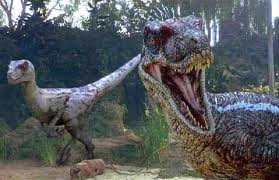
Velociraptor wasn't nearly as intelligent as it was portrayed in Jurassic Park, and could probably have been outwitted by a newborn puppy (Alain Beneteau)

Ads

1 Tip to Erase Wrinklesmiraclephytoceramides.comNew anti aging secret revealed. Remove wrinkles fast. Try it today.

Genetics vs. Genomicswww.healio.com/geneticsLearn the difference between these commonly confused terms.

Velociraptor

Velociraptor, like other feathered dinosaurs, was a distant ancestor of modern birds (Wikimedia Commons)

Thanks to Jurassic ParkVelociraptor is one of the world's most famous dinosaurs--but there's a big difference between the Hollywood version of Velociraptor and the one familiar to paleontologists. Here are 10 facts you may or may not have known about this small, vicious predator. (See also a gallery ofVelociraptor pictures and a fossil history of Velociraptor.)

1. That wasn't really a Velociraptor in Jurassic Park.

The sad fact is, Velociraptor's claim to pop-culture fame is based on a lie: the movie's special-effects wizards have long since confessed that they modeled their Velociraptor after the much bigger (and much more dangerous-looking) raptorDeinonychus, whose name isn't quite as catchy or easy to pronounce. If life were fair, Deinonychus would be much more famous than Velociraptor, but that's the way the Jurassic cookie crumbles.

2. Velociraptor was about the size of a big chicken...

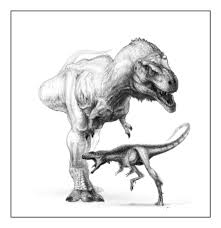
For a dinosaur that's often mentioned in the same breath as Tyrannosaurus Rex, Velociraptor was remarkably puny: this meat-eater weighed only about 30 pounds soaking wet (about the same as a good-sized human toddler) and achieved an awe-inspiring height of three feet, max. In fact, it would take six or seven adult Velociraptors to equal one average-sized Deinonychus, but who's counting?

3. ...and it looked like a big chicken, too.

Judging by the smaller, more primitive, feathered raptors that predated it by millions of years, paleontologists believe Velociraptor sported feathers, too, though the direct evidence for this is slim. Artists have pictured this dinosaur as sporting everything from wan, chicken-like tufts to bright green plumage worthy of a South American parrot--and it almost certainly wasn't scaly-skinned, as portrayed in Jurassic Park.

4. Velociraptor lived in central Asia, not North America.

Given its red-carpet treatment in Hollywood, you might expect Velociraptor to have been as American as apple pie, but the fact is that this dinosaur was native to modern-day Mongolia (the most famous species is Velociraptor mongoliensis). America Firsters in need of a native raptor will have to settle for Velociraptor's much bigger, and much more deadly, cousins Deinonychus and Utahraptor.

5. There's no evidence that Velociraptor hunted in packs.

To date, all of the dozen or so Velociraptor skeletons discovered in Mongolia have been of solitary individuals. The idea that Velociraptor ganged up on its prey in cooperative packs probably stems from the discovery of associated Deinonychus remains in North America; this larger raptor may have hunted in packs in order to bring down large hadrosaurs likeTenontosaurus.

6. Velociraptor wasn't the smartest dinosaur of the Cretaceous period...

While we're on the subject: that scene in Jurassic Park where a Velociraptor figures out how to turn a doorknob? Pure fantasy. Even the putatively smartest dinosaur of the Mesozoic Era,Troodon, was dumber than a newborn kitten, and it's a safe bet that no reptiles (ancient or modern) have ever learned how to use tools. A real-life Velociraptor would likely have butted its head against the closed door until it knocked itself out.

7. ...and it wasn't the fastest, either.

Not to beat up on poor little Velociraptor, but this "speedy thief" (that's what its name means in Greek) wasn't nearly as fast as contemporary ornithomimids, or "bird mimic," dinosaurs, some of which could attain speeds of up to 50 miles per hour. Even the fastest Velociraptors would have been severely hampered by their short, turkey-sized legs, and could probably have been outrun by a human child.

8. A Velociraptor was fossilized in the act of attacking a Protoceratops.

So Velociraptor didn't hunt in packs, and it wasn't particularly big, smart or speedy. How did it survive? Well, by attacking comparably small dinosaurs like the pig-sized Protoceratops: one famous fossil displays a Velociraptor and Protoceratops locked in combat as they were both buried alive by a sudden sandstorm (and by the evidence, it's far from obvious that Velociraptor had the upper hand.)

9. Velociraptor's main weapons were its single, oversized hind claws.

Although its sharp teeth were certainly unpleasant, the primary weapons in Velociraptor's arsenal were the curved, three-inch-long claws on its hind feet, which it used to slash and jab at prey. Paleontologists surmise that this dinosaur stabbed its prey in the gut in sudden,surprise attacks, then withdrew to a safe distance as its victim bled to death.

10. Velociraptor was probably warm-blooded.

Cold-blooded reptiles don't excel at pursuing and savagely attacking their prey (think of crocodiles, which are content to lay patiently in wait until an animal ventures too close). That fact, combined with its probable coat of feathers, leads paleontologists to believe that Velociraptor (and other theropods, including tyrannosaurs and "dino-birds") had a warm-blooded metabolism comparable to that of modern birds and mammals.
 

Name:

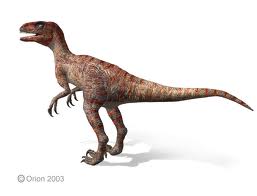
Dromaeosaurus (Greek for "running lizard"); pronounced DRO-may-oh-SORE-us

Habitat:

Plains of North America

Historical Period:

Late Cretaceous (75 million years ago)

Size and Weight:

About 6 feet long and 25 pounds

Diet:

Meat

Distinguishing Characteristics:

Small size; powerful jaws and teeth; probably feathers

About Dromaeosaurus:

Dromaeosaurus is the eponymous genus of dromaeosaurs, the smallish, speedy, bipedal, probably feather-covered carnivorous theropods better known to the general public as raptors. Still, this genus differed from more famous raptors like Velociraptor in some important respects: its skull, jaws and teeth were relatively robust, for instance, a very tyrannosaur-like trait for such a small dinosaur. Despite its fame among paleontologists, Dromaeosaurus (Greek for "running lizard") isn't very well represented in the fossil record; all we know of this raptor amounts to a few scattered bones dug up in Canada.


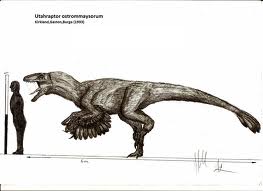
1. Utahraptor was discovered in...you guessed it...Utah!

Dozens of dinosaurs have been discovered in the state of Utah, but very few names directly reference this fact. The "type fossil" of Utahraptor was unearthed in Utah's Cedar Mountain Formation in 1991 and named by a team including paleontologist James Kirkland; however, this raptor lived tens of millions of years before its fellow Utah namesake, the recently described Utahceratops.

2. Utahraptor is the largest raptor yet identified...

Utahraptor's claim to fame is that it was the largest raptor ever to walk the earth; adults measured about 25 feet from head to tail and weighed in the neighborhood of 1,000 to 2,000 pounds, compared to 200 pounds or so for the much later Deinonychus. (In case you were wondering, the two-tonGigantoraptor from central Asia technically wasn't a raptor, but a large theropod dinosaur.)

3. ...and the claws on its hind feet were correspondingly huge.

Raptors were distinguished by the large, curving, single claws on each of their hind feet, which they used to disembowel their prey. Befitting its large size, Utahraptor possessed especially dangerous nine-inch-long claws (which sort of made it the dinosaur equivalent of a saber-tooth tiger!) Utahraptor probably dug its claws into plant-eating dinosaurs like Iguanodon; see Utahraptor vs. Iguanodon - Who Wins? for a blow-by-blow description of this battle.

4. Utahraptor lived during the early Cretaceous period...

Perhaps the most unusual thing about Utahraptor, aside from its size, is when this dinosaur lived: about 125 million years ago, during the early Cretaceous period. Most well-known raptors (like the North American Deinonychus and the Asian Velociraptor) flourished toward the end of the Cretaceous period, 50 million years after Utahraptor's day had come and gone.

5. ...a neat reversal of the usual evolutionary pattern.

In the history of life on earth, it's usually the case that large animals evolve from pint-sized predecessors (witness the tiny mammals, like Pakicetus, that gave eventually rise to the first whales). Utahraptor is the exception that proves the rule: this dinosaur lay near the root of the theropod family tree that spawned the much smaller raptors of the later Cretaceous period.

6. Utahraptor was a close relative of Achillobator.

Most of the North American dinosaurs of the Cretaceous period had similar-looking counterparts in Europe and Asia. In the case of Utahraptor, the ringer was the much later Achillobator of central Asia, which was slightly smaller (only about 20 feet from head to tail) but had some odd anatomical quirks of its own, notably the extra-thick Achilles tendons in its heels.

7. Utahraptor was probably covered with feathers...

Befitting their kinship with the first prehistoric birds, most, if not all, raptors were covered with feathers, at least during certain stages of their life cycles. Although no direct evidence has been adduced for Utahraptor having feathers, they were almost certainly present, if only in hatchlings or juveniles (and the odds are that full-grown adults were feathered as well).

8. ...and it probably had a warm-blooded metabolism, too.

Today, most paleontologists agree that theropod dinosaurs possessed some kind of warm-blooded metabolism--perhaps not the robust physiology of modern mammals, but something intermediate between reptiles and mammalians. As a large, feathered, actively predatory theropod, Utahraptor was almost certainly warm-blooded, which was bad news for its cold-blooded, plant-munching prey.

9. The species name of Utahraptor honors paleontologist John Ostrom.

The single named species of Utahraptor, Utahraptor ostrommaysorum, honors the famous American paleontologist John Ostrom (as well as the dinosaur robotics pioneer Chris Mays). Way back before it was fashionable, Ostrom speculated that Deinonychus was a distant ancestor of modern birds, a theory that has since been accepted by the vast majority of paleontologists.

10. Utahraptor may have hunted in packs.

Since only isolated fossils of Utahraptor have been discovered, positing any kind of pack behavior is a delicate matter. However, there's strong evidence that the closely related North American raptor Deinonychus hunted in packs, and it may well be the case that pack hunting defined raptors every bit as much as those curved claws on their hind feet!


1. Troodon is pronounced "TRUE-oh-don..."

One of the most frequently mispronounced dinosaurs, Troodon actually comprises three syllables (there used to be an umlaut over the second "o" as a way of alerting the unwary). This genus was named way back in 1856 by the famous American paleontologist Joseph Leidy, who actually thought he was dealing with a small, inoffensive lizard rather than a true dinosaur.

2. ...and was named after a single tooth.

Troodon is Greek for "wounding tooth," a reference to the single incisor by which it was originally known. It wasn't until the early 1930's that the actual bones of this dinosaur were discovered (amounting to fragments of its hand, foot and tail), and even then, the fossils were assigned to the incorrect genus (for more, see the article How Was Troodon Discovered?).

3. For decades, Troodon was known as Stenonychosaurus.

In 1932, Charles R. Sternberg erected the new genus Stenonychosaurus, which he classified as a basal theropod closely related to Coelurus. It was only after the discovery of more complete fossil remains in 1969 that paleontologists redesignated Stenonychosaurus as Troodon, and recognized its close affinity to the Asian theropod Saurornithoides.

4. Troodon had a bigger brain than most dinosaurs...

The most notable feature of Troodon was its unusually large brain, which was much bigger, in proportion to the rest of its body, than the brain matter of comparably sized theropods. According to one analysis, Troodon had an "encephalization quotient" several times that of most other meat-eating dinosaurs, making it a true Albert Einstein of the Cretaceous period.

5. ...and might eventually have evolved a human level of intelligence.

In 1982, the Canadian paleontologist Dale Russell speculated about what might have happened if Troodon had managed to survive the K/T Extinction65 million years ago. In his "counterfactual" history, Troodon evolved into a large-brained, two-legged, intelligent reptile with big eyes, partially opposable thumbs and three fingers on each hand--and looked much like a modern human being!

6. Unlike most dinosaurs, Troodon flourished in colder climates.

Troodon had larger eyes than most theropod dinosaurs, a hint that it needed to gather in all the available light from its cold, dark climate (another dinosaur that pursued this evolutionary strategy was the AustralianLeaellynasaura). Processing more visual information necessarily entails having a bigger brain, which helps to explain this dinosaur's relatively high IQ.

7. Troodon laid clutches of 16 to 24 eggs...

Besides its presumed intelligence, Troodon is famous for being one of the few carnivorous dinosaurs whose parenting routines are known in detail. To judge by the preserved nesting grounds discovered by Jack Horner in Montana's Two Medicine Formation, Troodon females laid two eggs per day over the course of a week or so, resulting in circular clutches of 16 to 24 eggs.

8. ...which were probably brooded by the males of the species.

The evidence is circumstantial at best, but a recent analysis comparing the bone growth of Troodon with that of modern birds and crocodiles concludes that this dinosaur's eggs were brooded by the males of the genus, and not the females. If this sounds unusual, bear in mind that male brooding is standard operating procedure for many species of modern birds!

9. It's unclear how many species Troodon comprised.

Fossil specimens of Troodon have been unearthed across the expanse of North America, as far north as Alaska and (depending on how you interpret the evidence) as far south as New Mexico. When paleontologists are faced with such wide distributions, they're tempted to speculate that the umbrella genus may be too big--and that some "Troodon" species actually belong to their own genera.

10. Troodon was probably covered in feathers.

Except in certain exceptional circumstances--witness the profusion of "dino-birds" that have recently been discovered in China--feathers don't preserve well in the fossil record. Still, considering its evolutionary affinity with raptors and other small theropods, it would be very surprising if Troodon didn't sport at least some feathers, and at least during some point of its life cycle.


Name:

Raptorex (Greek for "thief king"); pronounced RAP-toe-rex

Habitat:

Woodlands of central Asia

Historical Period:

Early Cretaceous (130 million years ago)

Size and Weight:

About 10 feet long and 150 pounds

Diet:

Meat

Distinguishing Characteristics:

Small size; stunted hands and arms

About Raptorex:

Discovered in inner Mongolia by the famous paleontologist Paul Sereno, Raptorex lived about 60 million years before its more famous descendantTyrannosaurus Rex--but this dinosaur already had the basic tyrannosaur body plan (big head, powerful legs, stunted arms), albeit in a diminutive package of only 150 pounds or so. (Based on an analysis of its bones, the sole specimen of Raptorex appears to have been a full-grown adult six years of age). Analogizing from other early tyrannosaurs--like the Asian Dilong--Raptorex may have been covered with feathers, though as yet there's no definitive proof for this.

A recent study of Raptorex's "type fossil" has cast some doubt on the conclusions reached by Sereno. Another team of paleontologists claims that the sediments Raptorex was found in have been dated incorrectly, and that this dinosaur was actually a juvenile of the late Cretaceous tyrannosaur Tarbosaurus! (The giveaway is that the fossil of a prehistoric fish uncovered alongside Raptorex was misidentified, and it fact belonged to a genus that plied the rivers of Mongolia during the late rather than early Cretaceous period.)


Name:

Microraptor (Greek for "small thief"); pronounced MY-crow-rap-tore

Habitat:

Woodlands of Asia

Historical Period:

Early Cretaceous (130-125 million years ago)

Size and Weight:

About 2 feet long and 3-4 pounds

Diet:

Fish and small animals

Distinguishing Characteristics:

Tiny size; primitive feathers; wings on arms and legs

About Microraptor:

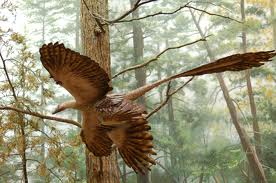
Probably because it was so small, Microraptor fossilized unusually well--paleontologists in China have unearthed about two dozen more-or-less complete specimens of this tiny, feathered raptor of the early Cretaceous period, complete with traces of internal organs and primitive feathers.

The most spectacular fact about Microraptor is that it had not one, but two, sets of primitive wings--one on its forearms (similar to other birdlike dinosaurs, like Archaeopteryx), and one on its hind legs. This formidable feathered arsenal notwithstanding, scientists believe Microraptor was, at best, an occasional glider, much like a flying squirrel--and probably spent most of its life high up in the branches of trees. (A recent study has shown that the feathers of Microraptor were black and glossy, and likely evolved more as a way to attract mates than to fly the short distances between trees; an even more recent study concludes that Microraptor, far from being a clumsy flyer, was capable of swooping down from trees and plucking fish out of the water.)

This leads to the important question: was Microraptor a crucial "missing link" in the gradual evolution of dinosaurs into birds, or did it represent a four-winged experiment that (literally) never quite got off the ground? The answer may await future fossil discoveries, but the lack of any four-winged birds living today should give you an important clue.


large-dinosaurs.php?temp-new-window-replacement=true